


Sheesham Wood Furniture Care Guide: How to Keep Your Furniture Looking and Performing for Decades
Sheesham furniture can last a very long time. Its dense grain, natural colour, and ability to hold a fine finish make it one of the most valued woods in South Asian furniture. But even the best timber responds to heat, sunlight, moisture, and neglect. Most of the problems owners report, including fading, dull surfaces, hairline cracks, and loose joints, come from a small number of avoidable causes.
This guide explains how Sheesham behaves, what to do day to day, how to polish and deep clean without damaging the finish, and how to handle the seasonal changes common in Pakistan. It also covers the problems that need professional attention, so you know when a simple routine is not enough.
Understanding Sheesham Before You Care for It
Sheesham comes from Dalbergia sissoo, a tree native to the Indian subcontinent and southern Iran. Wikipedia’s entry on the species notes that North Indian rosewood is among the finest cabinet and veneer timbers, and that it is usually seasoned before furniture is made, commonly by drying it outdoors for around six months.
Two facts from that source shape every care decision.
The heartwood and sapwood behave differently. The heartwood is durable (its specific gravity is roughly 0.7 to 0.8) and highly resistant to fungi. The sapwood, the lighter outer layer, is readily attacked by dry-wood termites and borers. Good furniture is made mostly from heartwood, but the quality of the timber varies from one maker to another. Ask the maker which part of the log was used, and whether it was properly seasoned.
Seasoning matters. Timber that was not dried properly can crack or warp once it reaches a home with different humidity. This is a manufacturing issue, but it is also why sudden climate changes can cause damage to furniture that was not fully seasoned.
Sources disagree about how Sheesham handles moisture. Some describe it as highly moisture resistant. Others, including WoodenStreet’s care instructions, warn that Sheesham should not be exposed to significant humidity changes. The practical answer is the same either way: keep the furniture in a stable environment and avoid water standing on the surface.
What Damages Sheesham Furniture
Before you can protect your furniture, it helps to know what causes harm.
Direct sunlight. Prolonged sun bleaches the colour and can break down the finish, leaving a faded patch on the side closest to the window. Care guides from Dutchcrafters and The Conran Shop both list sun exposure as a leading cause of fading.
Heat sources. Radiators, heaters, fireplaces, and even a laptop left on a dresser can dry the surface and leave heat marks. Keep furniture at a safe distance from any heat source.
Humidity swings. Wood expands when it absorbs moisture and shrinks when it loses it. Repeated swings can open joints and cause cracks, especially on large flat surfaces like table tops and bed headboards. Some guides recommend keeping indoor relative humidity between 30 and 50 percent, while others say 40 to 60 percent. Both are reasonable targets for a home, and a basic hygrometer will tell you where your room stands.
Standing water. A glass left on a table can leave a ring within minutes. Water that soaks into the finish can lift it and, over time, stain the wood beneath.
Harsh cleaning products. Silicone sprays, furniture wipes containing alcohol or ammonia, and abrasive scourers strip the protective layer and leave the surface dull or sticky.
Neglect. Dust combined with dry air and infrequent polishing leads to a surface that looks tired and loses its protection.
Daily and Weekly Care
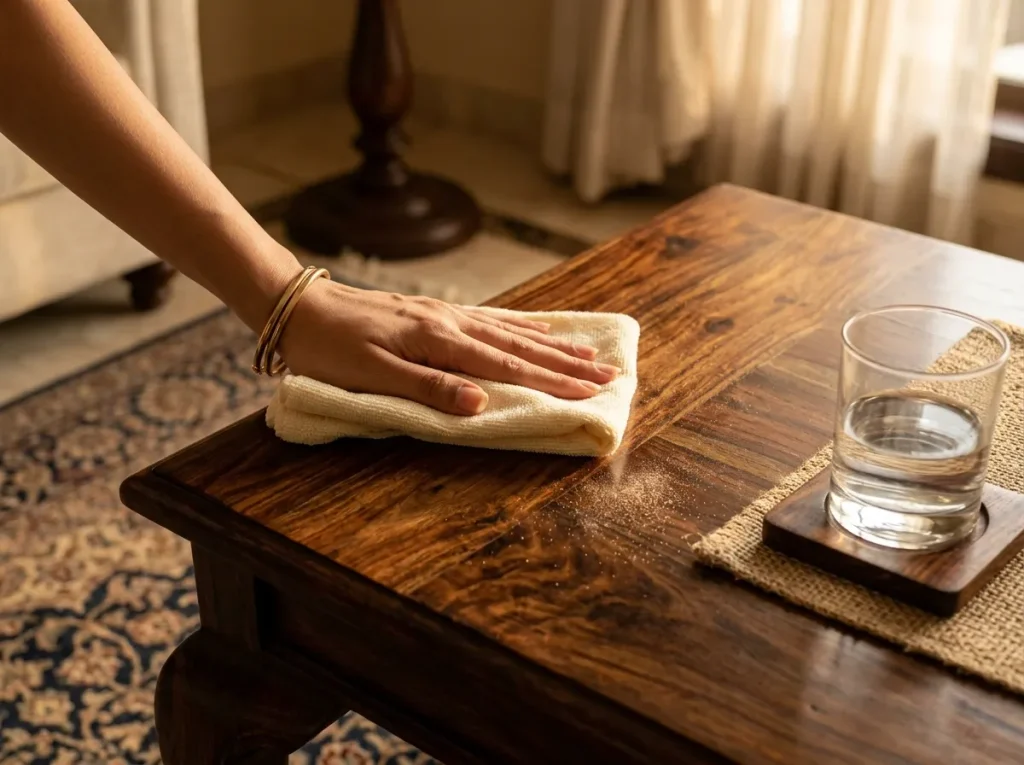
Most Sheesham furniture needs very little daily attention, but consistency matters.
Dust regularly. Use a soft, dry microfiber cloth. Dust carries fine grit that acts like sandpaper when you wipe it across the surface. A slightly damp cloth is acceptable for removing stubborn dust, but wring it out well first. Avoid excess water.
Wipe spills immediately. Use a clean, dry cloth to blot liquids. Do not rub, because rubbing can spread the spill and damage the finish.
Use coasters and mats. Place coasters under glasses and cups, and use table mats under hot dishes. Heat and water are the two most common causes of visible damage on dining and side tables.
Rotate cushions and décor. On a bed or sofa, rotating cushions helps distribute wear. On a dresser or console, moving décor occasionally prevents a shadow line from forming where objects sit.
Keep the room ventilated. Good air circulation helps keep humidity stable. Avoid placing furniture against an exterior wall that gets damp in the monsoon.
Polishing: How Often and What to Use
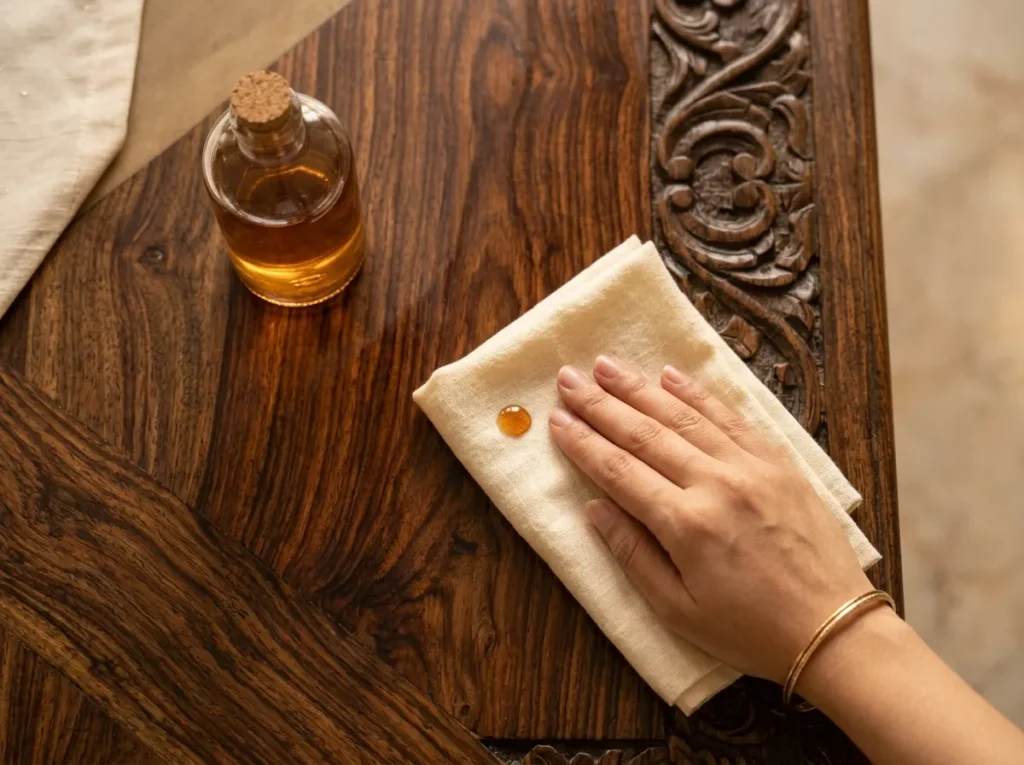
Polish restores the shine and adds a protective layer. How often you polish depends on the finish, the room, and how much the furniture is used.
As a practical starting point, many furniture guides suggest polishing every three to six months, and more often on high-use surfaces such as dining tables. Polish when the surface looks dull, when water no longer beads on the surface, or when the grain looks dry.
Choose a wood-safe polish. Look for products labelled for wood furniture and check the label for compatibility with your finish. Avoid silicone-based sprays, which can build up and make future repairs harder.
Apply sparingly. Put a small amount on a soft cloth, not directly on the furniture. Rub gently in the direction of the grain. Less polish applied thinly gives a better result than a heavy coat.
Buff off the excess. After the polish has settled for the time stated on the label, buff the surface with a dry cloth until it no longer feels tacky.
Beeswax for a warm sheen. Natural beeswax gives a soft, traditional lustre. Apply a thin coat, let it sit, and buff. Beeswax needs reapplication more often than synthetic polish, and it can build up if you apply too much.
Test first. Try any new polish on a hidden area, such as the underside of a table or the back of a headboard, and wait a day before deciding.
Deep Cleaning Twice a Year
Once or twice a year, give the furniture a more thorough clean. A simple routine works well:
- Remove all décor, cushions, and loose items.
- Dust the entire piece, including the underside, joints, and carved areas. A soft brush helps with grooves.
- Clean with a mild, pH-neutral cleaner made for wood, or a soft cloth dampened with water and a small amount of mild soap. Wring the cloth out thoroughly.
- Dry the surface immediately with a clean dry cloth.
- Allow the piece to dry fully before polishing.
- Polish lightly, then buff.
Do not soak the wood, and do not use a steam mop or wet cloth on carved detail. Water trapped in carving can cause staining over time. For gilded or painted highlights, use only the gentlest dry dusting, as these finishes can be damaged by moisture or rubbing.
Caring for Carved and Gilded Pieces
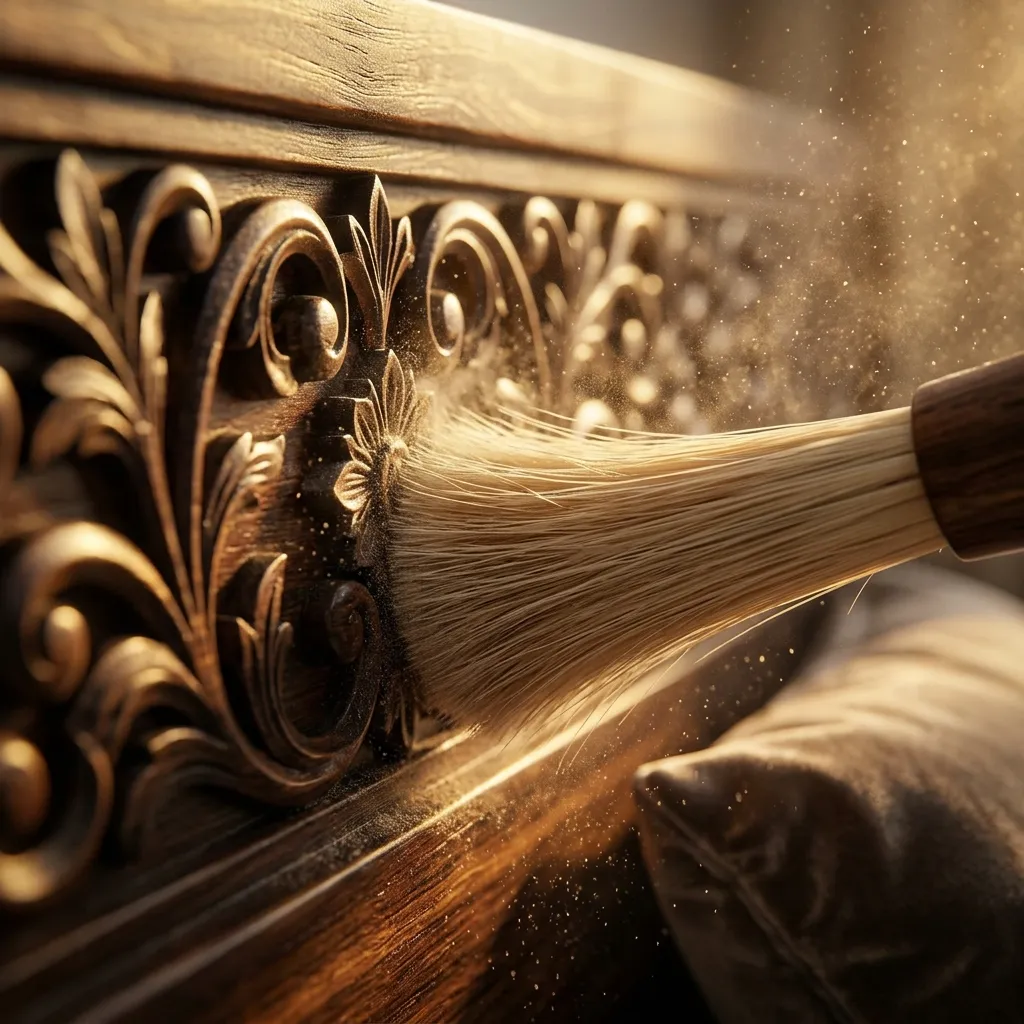
Carved Sheesham furniture needs more attention than a plain surface. Dust collects in every groove, and the fine detail can be chipped if handled roughly.
Use a soft natural-bristle brush or a clean paintbrush to lift dust from carvings. Work from the top of the piece downward so that loosened dust does not settle on areas you have already cleaned. Avoid compressed air on delicate carving, as it can drive debris into joints.
Gilding and gold-toned finishes are more fragile than polished wood. Dust them gently with a dry cloth or soft brush only. Do not polish gilded areas unless the maker advises a specific product. Keep candles, incense, and heat sources away from gilded pieces, as they can discolour the finish.
If carving has a crack or a missing piece, do not attempt a home repair with glue or filler. Contact a skilled restorer, and ask the original maker whether they can supply matching parts.
Care for Beds and Headboards
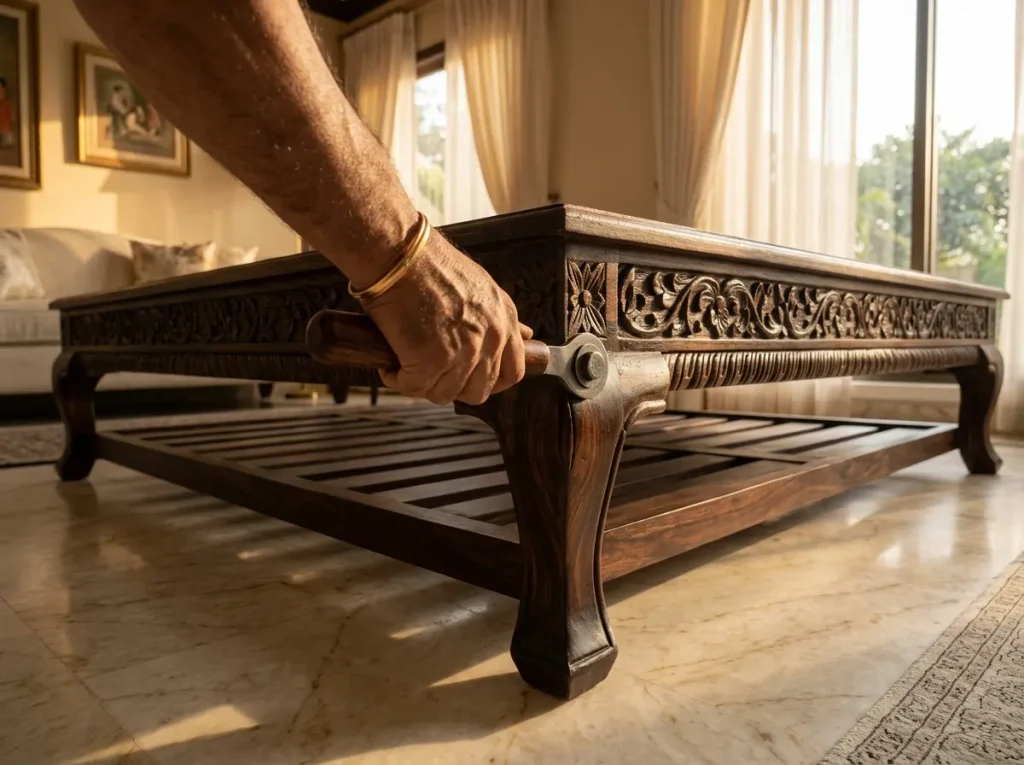
Sheesham beds carry weight, and their joints take regular stress. A few simple habits protect them.
Check bolts and joints every few months. Tighten any loose fixings with the correct tool, and do not overtighten. Over-tightening can crack the wood around the fitting.
Keep the bed level. Uneven floors put strain on the frame. Use shims if needed, and check that all legs make even contact.
Protect the headboard. Keep the headboard away from damp walls and direct sun through a window. Upholstered headboards need separate care: vacuum them regularly with a soft brush attachment and follow the fabric’s cleaning code.
Ventilate under the bed. Air flow under the frame helps prevent moisture buildup, especially in humid months. Avoid storing damp items beneath the bed.
Support the mattress properly. A slatted base or platform that is level and well spaced protects the frame and the mattress. Storage beds with a lift mechanism should be checked regularly, as the hardware adds stress to the joints.
Living With Pakistan’s Seasons

Pakistan’s climate changes sharply across the year, and furniture feels it. The dry, hot months bring heat and sun. The monsoon brings humidity. Winter can bring dry indoor air if heaters run for long periods.
Summer. Close curtains or blinds during the hottest part of the day, particularly on west-facing windows. Keep furniture away from windows and from air conditioners that blow directly onto it. Avoid placing wood near a heater or a sun-heated wall.

Monsoon. Run a dehumidifier or use the air conditioner’s dehumidify setting if humidity is high. Keep furniture slightly away from exterior walls, which can absorb moisture. Wipe down surfaces when the air feels damp and dry them properly. Check for any signs of mould or mildew, especially on the underside of pieces and in corners.
Winter. Heating can dry the air quickly. Keep furniture away from radiators and heaters. If your home becomes very dry, a humidifier or a bowl of water near the furniture (not touching it) can help. Watch for new cracks or gaps, which can appear when wood dries out.
Keep a simple hygrometer in the room where your main piece sits. It costs little and tells you when conditions move outside a safe range.
Signs of Trouble and When to Get Help
Most issues can be managed at home. Some need an expert.
Fading or colour changes. Mild fading from sun exposure can sometimes be improved with careful polishing. Deep fading may need a professional refinish.
Water rings or white marks. Light marks can often be reduced by gently polishing with a fine, wood-safe product. Dark stains that have soaked in typically need a restorer.
Hairline cracks. Small surface cracks are often caused by dry air and may close as humidity stabilises. Larger cracks, or cracks that open wider over time, should be checked by a professional.
Loose joints. A joint that moves when the bed or table is pressed should be inspected before it fails. Do not glue joints without understanding the construction, as the wrong adhesive can cause more damage.
Insect activity. Small holes, frass (fine powder), or hollow-sounding wood can indicate wood-boring insects or termites. Sapwood is more vulnerable than heartwood, and any sign of activity should be checked by a pest control specialist before the damage spreads. Do not treat an infestation with the wrong chemical without advice.
Mould or persistent damp. Mould on the wood needs to be addressed quickly. Move the piece to a drier spot, clean the surface with a mild solution and dry it thoroughly. If the problem returns, the room needs ventilation or dehumidification.
A Simple Care Routine You Can Follow
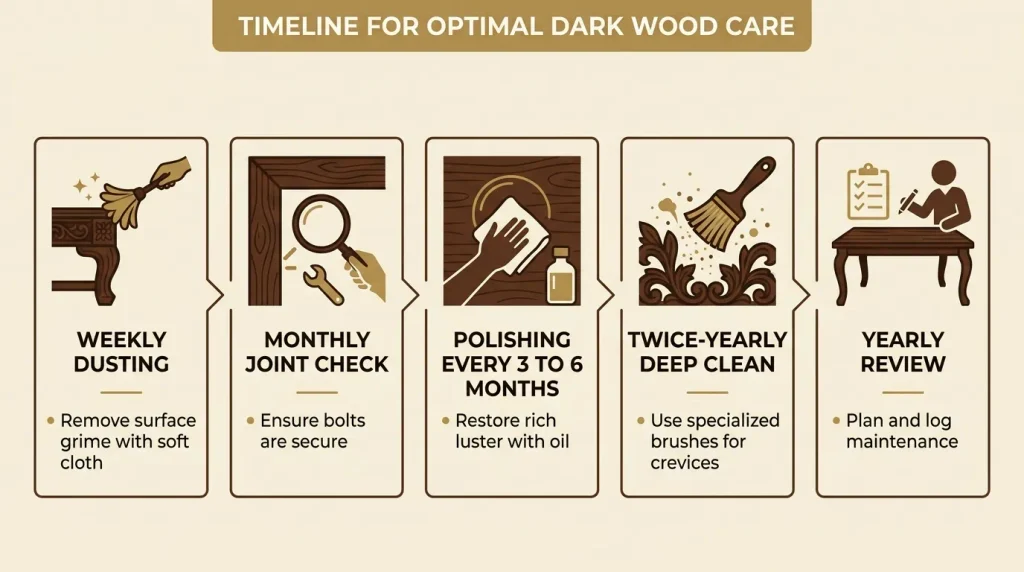
Every week: Dust with a soft dry cloth. Check for spills and wipe any moisture immediately.
Every month: Check joints and bolts on beds and chairs. Inspect for early signs of cracking, insects, or damp. Rotate cushions and décor.
Every three to six months: Polish with a wood-safe product or natural beeswax, then buff.
Twice a year: Carry out a deep clean, check humidity levels across the seasons, and reassess the room layout for sun and heat exposure.
Once a year: Review any repairs, check the warranty status, and note any changes in the finish or structure.
Common Mistakes
Using silicone sprays or furniture wipes that leave a residue. Applying too much polish, which can leave a sticky film. Placing furniture directly in sunlight or next to heaters. Wiping surfaces with a wet cloth and leaving them to dry on their own. Using household cleaners that contain alcohol, ammonia, or abrasives. Ignoring loose bolts until a joint fails. Treating carved or gilded detail the same way as a plain flat surface.
Frequently Asked Questions
How often should I polish Sheesham furniture?
Many furniture guides suggest every three to six months, depending on use and climate. Polish sooner if the surface looks dull or water no longer beads on it.
Can I use a regular furniture spray on Sheesham?
Choose a product labelled for wood furniture and check that it is compatible with your finish. Avoid silicone-based sprays, which can build up and make repairs harder.
Is Sheesham furniture safe in humid conditions?
Sheesham heartwood is durable and resists fungi, but humidity changes can still cause movement and cracking. Keep the room well ventilated and monitor humidity where you can.
Why is my Sheesham bed squeaking?
Squeaking usually means a bolt or joint has loosened. Check and tighten fixings gently, and confirm that the bed is level. If it continues, inspect the joints more closely.
Can I remove water rings from Sheesham?
Light rings can often be reduced by gentle polishing with a wood-safe product. Deep stains need professional attention.
How do I clean carved Sheesham furniture?
Use a soft natural-bristle brush or a clean paintbrush to lift dust from the grooves. Avoid water in carved areas.
Should I use beeswax or synthetic polish?
Both work. Beeswax gives a warmer sheen but needs more frequent reapplication. Synthetic polish is often easier to maintain. Test any product on a hidden area first.
Does Sheesham need to be treated against termites?
Heartwood is naturally resistant to fungi, but sapwood is vulnerable to dry-wood termites and borers. Ask the maker how the timber was treated and inspect the furniture regularly.
Finding the Right Care for Your Piece
Every maker has slightly different finishes and construction. Before you start a routine, check the care instructions that came with your furniture, and keep any receipt or warranty document. If you are unsure about a finish, ask the maker.
If you have a MZee Furniture piece and need guidance, our contact page is the best place to start. For background on choosing solid wood furniture, read our furniture buying guide on solid wood. You can also review our returns policy if you have a concern about a product after delivery.
For bed options that suit careful, long-term use, browse our bedroom bed sets, or compare two carved pieces: Royal King Size Bed BS007 and Classic King Size Bed BS008.