
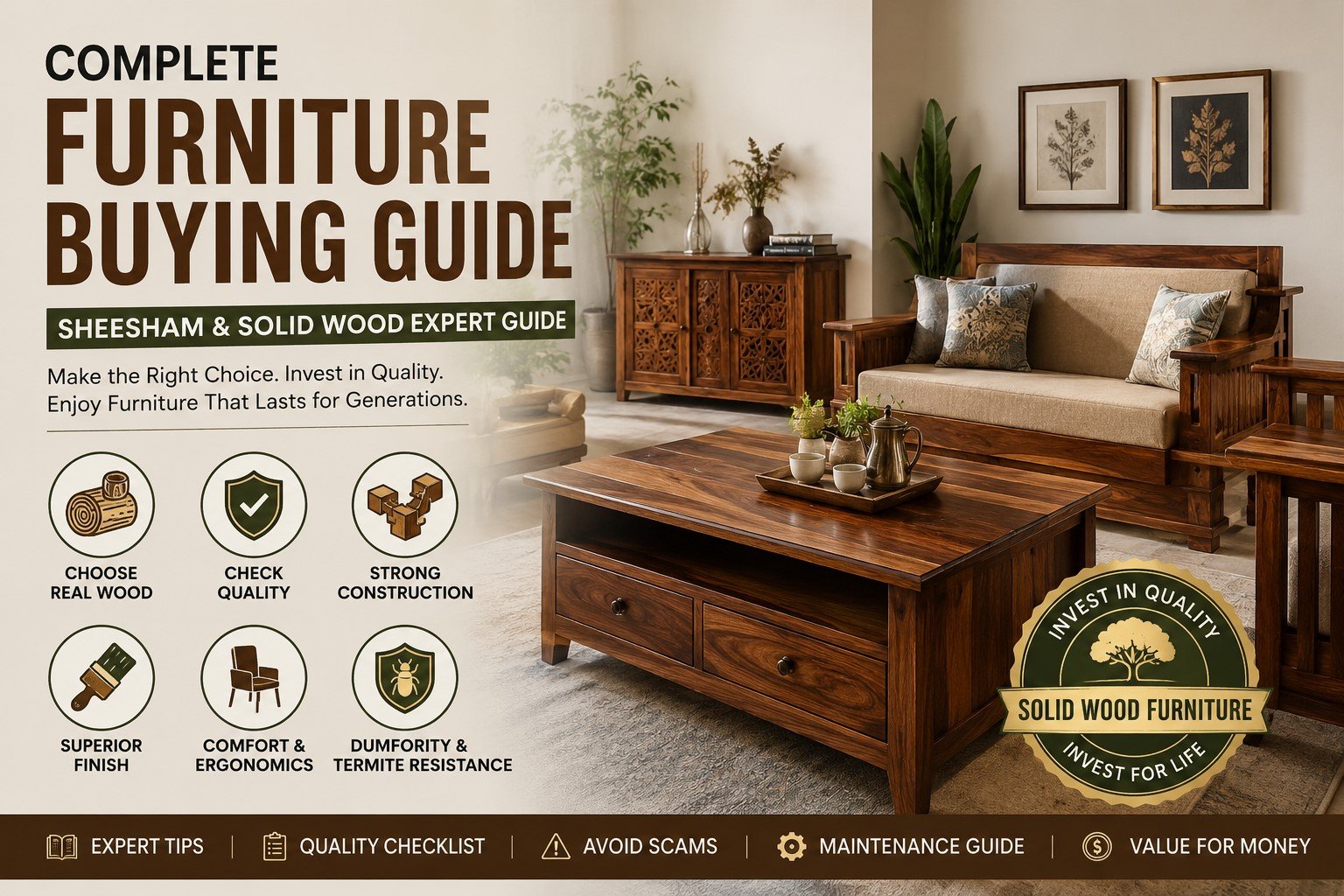
1. Introduction Furniture Buying Guide
Solid wood furniture has always been considered the gold standard in durability, aesthetics, and long-term value. Unlike engineered alternatives, solid wood is carved directly from natural timber logs, giving each piece a unique grain, strength, and character that cannot be replicated artificially.
Among all hardwoods used globally, Sheesham wood (also known as Indian Rosewood) has gained massive popularity in markets like Pakistan, India, UAE, UK, and the USA. It is widely used for luxury beds, dining sets, sofas, console tables, and handcrafted carved furniture.
However, today’s furniture market is also full of confusion. Buyers often struggle to distinguish between:
- Real solid wood vs MDF or veneer furniture
- High-grade export-quality vs low-grade local production
- Handcrafted joinery vs mass-produced weak structures
This guide is designed to remove that confusion completely. It is a practical, field-tested furniture buying guide written from the perspective of industry experience, not theory.
2. Types of Wood Used in Furniture
Understanding wood types is the foundation of smart furniture buying.
Sheesham Wood
- Dense hardwood with strong grain patterns
- Naturally resistant to termites (to some extent)
- Excellent for carving and luxury furniture
- Heavy and long-lasting
Teak Wood
- Premium global hardwood
- Extremely high oil content (best natural weather resistance)
- Expensive but highly durable outdoors and indoors
Oak Wood
- Popular in Western markets
- Strong and stable grain
- Often used in modern minimal furniture designs
MDF vs Solid Wood
MDF (Medium Density Fiberboard):
- Engineered from wood dust and resin
- Smooth surface but weak structure
- Not durable for long-term heavy use
- Prone to swelling with moisture
Solid Wood:
- Natural timber cut directly from trees
- Strong internal fiber structure
- Can last decades if maintained properly
- Can be repaired, refinished, and restored
Engineered Wood vs Natural Wood
Engineered wood (plywood, MDF, particle board) is cheaper and widely used in budget furniture. However, it cannot match the strength, longevity, and resale value of solid wood furniture.
3. How to Identify Real Sheesham Wood
Many buyers are misled by polished surfaces that hide low-quality materials underneath.
Grain Pattern Check
Real Sheesham has:
- Irregular, flowing grain lines
- Natural color variation
- Visible pores and organic texture
Fake or laminated wood often looks:
- Too uniform
- Repeated patterns (printed veneer)
- Artificially smooth without depth
Weight Test
Sheesham is naturally heavy. If a large sofa or table feels unusually light, it may contain hollow frames or engineered wood.
Smell Test
Real wood has a mild natural earthy smell, especially when freshly cut or sanded. MDF or chemical boards often smell like glue or resin.
Sound Test
Knock lightly on the surface:
- Solid wood produces a deep, heavy sound
- Hollow or engineered boards produce a dull, empty sound
4. Wood Grading System
Professional furniture manufacturers classify wood into grades:
A Grade (Export Quality)
- Minimal defects
- Uniform moisture control
- Used in luxury export furniture
- High durability and finishing quality
B Grade
- Slight natural knots or variations
- Common in mid-range furniture
- Still strong and usable
C Grade
- Visible defects, uneven grain
- Used in budget furniture or internal structures
Moisture Content Importance
Ideal moisture level for furniture wood:
- 8% to 12% (export standard)
High moisture leads to:
- Cracks
- Warping
- Termite attraction
- Structural weakening
5. Construction Quality
Even the best wood fails if construction is weak.
Joinery Types
Mortise and Tenon Joint
- One of the strongest traditional joints
- Used in premium handcrafted furniture
- Long-lasting structural integrity
Dovetail Joint
- Common in drawers
- Extremely strong interlocking design
- Prevents pulling apart under load
Screws vs Nails
- Screws are preferred for strength and repairability
- Nails are often used in low-cost furniture
- High-end furniture uses concealed screws and joinery
Structural Testing
Professionally built furniture should:
- Not wobble under pressure
- Maintain alignment under weight
- Have reinforced corners and load points
6. Finishing Types
Finish determines both beauty and protection.
Matte Finish
- Natural and soft look
- Popular in modern interiors
- Hides scratches better
Glossy Finish
- Reflective and premium appearance
- Common in luxury furniture
- Requires more maintenance
PU (Polyurethane) Finish
- Strong protective layer
- Water and scratch resistant
- Industry standard for premium furniture
Lacquer Finish
- Smooth and elegant
- Often used in traditional carved furniture
Antique / Walnut / Gold Finishes
- Used in luxury classic furniture designs
- Adds royal and vintage aesthetics
- Popular in export-grade furniture markets
7. Design & Ergonomics
Good furniture is not just about looks—it must support the human body.
- Seating height must support natural posture
- Backrest angle should reduce spinal pressure
- Armrests should align with natural elbow position
- Dining chairs should allow proper leg movement
Luxury furniture often balances:
- Aesthetic design
- Comfort ergonomics
- Functional usability
8. Durability Factors
Termite Resistance
Sheesham has moderate natural resistance but still requires:
- Chemical treatment
- Regular maintenance
- Dry environment control
Climate Impact
- Humid climates can cause swelling
- Dry climates may cause minor cracking
- Proper seasoning of wood reduces these risks
Lifespan Expectations
- Budget furniture: 3–7 years
- Mid-range solid wood: 10–20 years
- High-quality Sheesham: 20–50+ years
9. Price Analysis
Furniture pricing depends on multiple factors:
Key Cost Drivers
- Wood quality and grading
- Hand carving labor
- Finish complexity
- Hardware quality
- Brand reputation
Why Luxury Furniture is Expensive
- Skilled craftsmanship required
- Time-intensive carving and assembly
- High-grade kiln-dried wood usage
- Export finishing standards
Cost Breakdown Insight
In premium furniture:
- 40–60% cost is wood and craftsmanship
- 20–30% finishing and polishing
- 10–20% logistics and branding
10. Buying Channels
Local Markets
- Affordable pricing
- High variation in quality
- Requires strong inspection skills
Online Stores
- Convenient
- Risk of misleading images
- Always check reviews and return policy
Showrooms
- Best for physical inspection
- Higher pricing due to overhead
Custom Furniture
- Fully personalized
- Risk: depends heavily on carpenter skill level
11. How to Avoid Scams
Common tricks in the furniture market:
- MDF hidden inside solid wood frames
- Over-polishing to hide defects
- Veneer layering over cheap wood
- Fake “solid wood” labeling
- Delivery substitution fraud
Always insist on:
- Raw wood inspection before polishing
- Clear material specification on invoice
- Trusted seller reputation
12. Buyer Checklist
Before purchasing:
- Inspect raw wood grain
- Check weight consistency
- Confirm moisture treatment
- Ask about joinery type
- Verify warranty terms
- Check seller credibility and past work
13. Global Standards
USA / UK Standards
- Strict moisture control requirements
- High durability expectations
- Eco-certified wood preferred
UAE Standards
- Focus on luxury aesthetics
- Heat-resistant finishing required
Export Quality Differences
Export furniture is:
- More precisely finished
- Better kiln-dried
- Structurally reinforced
14. Maintenance Guide
To extend furniture life:
- Clean with dry or slightly damp cloth
- Avoid direct water exposure
- Re-polish every 6–12 months
- Use termite protection treatment annually
- Keep away from direct sunlight or heat sources
15. Expert Insights (EEAT Boost)
From industry experience, the biggest misconception is:
“Expensive furniture always means good furniture.”
That is not true.
Real quality depends on:
- Internal structure, not surface finish
- Wood seasoning process
- Carpenter skill level
- Joint engineering
In professional manufacturing, the strongest furniture is often the one that looks simple but is structurally engineered from inside.
16. Common Mistakes
Buyers often make these errors:
- Choosing based only on design
- Ignoring internal wood quality
- Not checking joints
- Falling for glossy finishes
- Overlooking weight and balance
17. Future Trends
Furniture industry is evolving:
Smart Furniture
- Built-in charging ports
- LED-integrated designs
- Modular smart storage
Sustainable Wood
- Eco-certified timber
- Plantation-grown Sheesham
- Reduced deforestation impact
Modern Luxury Designs
- Minimalist carved fusion
- Matte luxury finishes
- Mixed material designs (wood + metal + marble)
18. Conclusion
Buying furniture is not just a purchase—it is a long-term investment in comfort, lifestyle, and home aesthetics.
Sheesham wood remains one of the most reliable and beautiful choices for solid wood furniture when sourced and constructed properly. However, the real value lies in understanding wood quality, construction methods, and finishing standards—not just appearance or price.
A smart buyer always checks:
- Wood authenticity
- Structural strength
- Moisture treatment
- Craftsmanship quality
If these factors are correct, solid wood furniture can easily last decades and even become a generational asset.
In the end, the best furniture is not the one that looks the most expensive—it is the one that is built to last the longest.
if you understand these guide notes pelae place order now click here